It is unlikely that we can stop the ecological crisis as long as our economy continues to grow. So we had better prepare for a future without GDP growth. In fact, the degrowth movement, which is rapidly gaining popularity among activists and scientists, advocates the deliberate scaling back of overproduction and overconsumption to bring the economy back into balance with the living world, in a way that reduces inequality and improves human well-being.
But what would a farewell to economic growth mean for geopolitics? Can a European Union that is the first to enter the post-growth era still remain (or become) a global player? Will it be able to defend itself, its allies, democracy and the international rule of law against aggressive autocrats? After all, the power of countries and alliances is largely determined by their wealth and military capabilities. We see this in Ukraine: thanks in part to Western support, in the form of money and arms, the country manages to withstand Russia’s imperialist assault.
The transition to a post-growth society must be a democratic one. But that is far from obvious at a time when authoritarian regimes are invading or threatening their democratic neighbours.
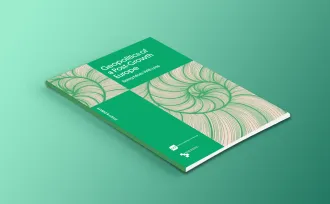
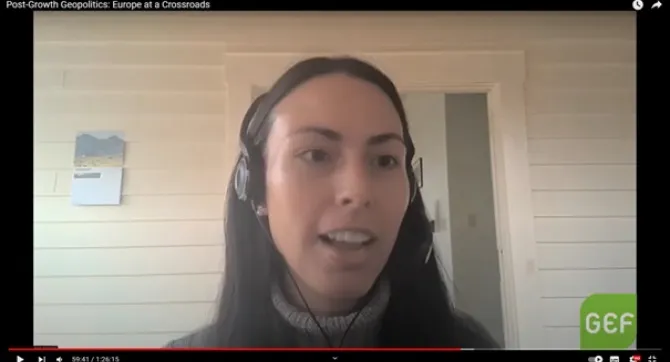
In 2023 and 2024, the transnational project Geopolitics of a Post-Growth Europe explored the tensions and synergies between degrowth/post-growth and geopolitics. It initiated a conversation between critics of economic growth and progressive thinkers on foreign and security policy, who often operate in separate circuits. The findings have been set out in the report Geopolitics of a Post-Growth Europe - Being More With Less. It contains an essay, interviews, and policy recommendations. Scroll down for more interviews and videos.
The transnational project Geopolitics of a Post-Growth Europe was organised by the Green European Foundation with the support of Wetenschappelijk Bureau GroenLinks (NL), Fondation de l'Écologie Politique (FR), Etopia (BE), Transición Verde (ES), Bluelink Foundation (BG), Centre for Green Politics (RS) and Green House Think Tank (UK), and with the financial support of the European Parliament to the Green European Foundation.